The Story Behind “Language Violence”

The Words That Once Hurt Me Became the Art I Created
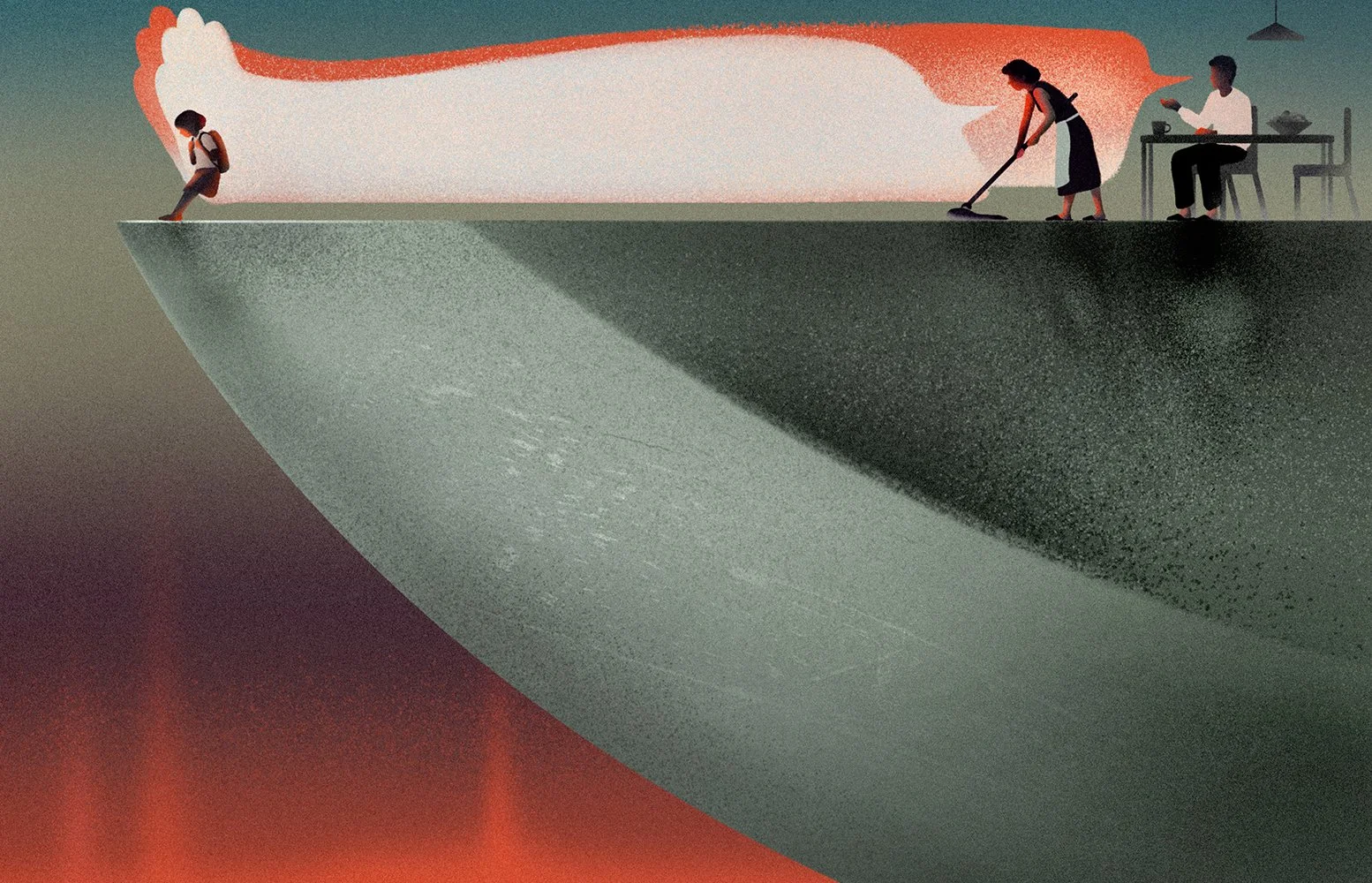
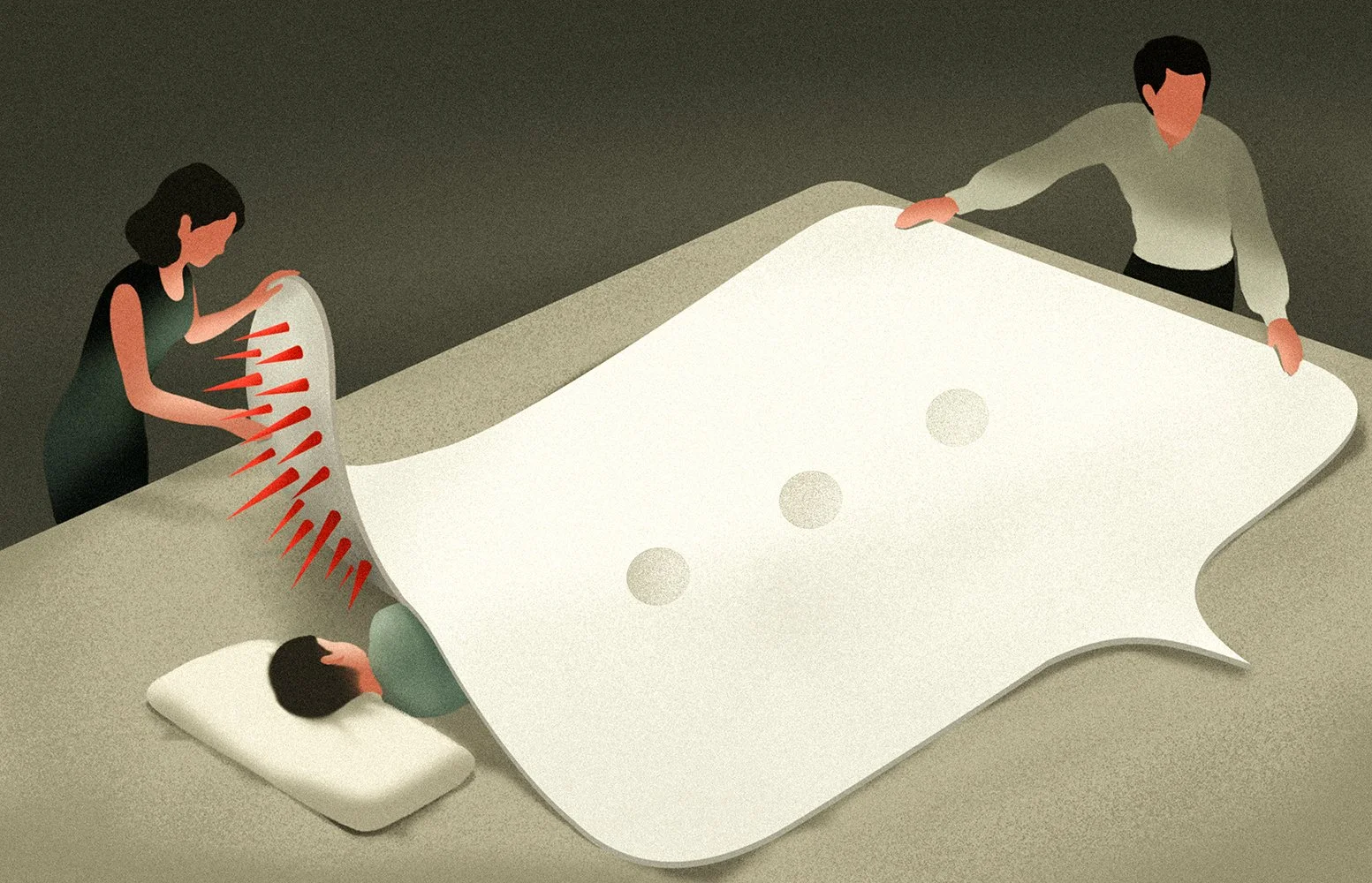
The Verbal Violence illustration series, which received a Bronze Cube at the ADC Annual Awards in New York, is the work I spent more than twenty years creating — transforming the words that once wounded me into art. This series quietly changed the trajectory of my life.

More than twenty years ago, when terms like “school bullying” and “family trauma” had not yet entered public conversations, I had already experienced extreme verbal abuse.

After I stood up for a classmate who was being bullied by a dominant group at school, I became their next target.

During the year and a half I spent at a prestigious provincial boarding middle school, I felt trapped in a closed world. Every day, I walked alone to the cafeteria and the classroom, repeating the same routes and facing the same isolation and verbal attacks again and again.

If I entered the dormitory, they would deliberately close the door and insult me from behind it.

If I tried to talk with a classmate, they would walk directly between us and pull that person away.

If I went to the playground, there would be boys known for their “sharp tongues” who would come specifically to insult me — I was told they could even receive “rewards” for doing so.

That environment felt like an extreme scene from a film.

The endless insults and isolation made me extremely sensitive. The cruel words replayed in my mind from morning until night, becoming louder and more distorted each time. That year and a half felt as long as a hundred years.

One classmate once told me: “You dress like an old person.”

After being constantly attacked with words, I unconsciously started wearing only gray clothes. I wanted to disappear and hide myself. But in a boarding school with strict military-style management, there was nowhere I could escape.

Sometimes I wrote about conflicts with classmates in my diary, but my teachers completely ignored them.

When I wrote imaginative stories and ideas in my diary, those moments gave me brief relief. Yet the feedback I received was: “Don’t overthink things. Focus on your studies.”

With almost no emotional outlet, my academic performance inevitably declined. Then came the negative judgments from my family. My self-esteem and confidence had barely begun to form before these experiences shattered them.

Under the pressure of declining grades, my family agreed to let me study art.

But even while learning to draw, setbacks continued. Until my final year of high school, when I achieved first place in the provincial art entrance examination in my region, a professional teacher told me: “You only got first place because of luck.”

For the first time in six years of middle and high school, when I finally received recognition, it was immediately denied by someone who was supposed to guide me.

At that moment, I believed I simply had no talent for art.

So throughout university and for more than ten years after graduation, I almost completely abandoned drawing. I kept trying different paths, searching for other possibilities.

During that difficult journey, I returned to the place where I grew up and faced my mother, hoping to receive some warmth and encouragement.

Instead, she told me that my elementary school classmates had secured stable careers, earned substantial year-end bonuses, and were living successful lives.

Her words were gentle, but they landed heavily on my heart.

Once again, I felt as though she was reminding me that I was not a child worthy of being loved.

The wounds caused by language, accumulated from childhood to adulthood, eventually gathered into the Verbal Violence series more than twenty years later.

While creating this series, I gradually realized something:

The pain caused by family can feel deeper than school bullying because I always carried a greater expectation of love from my family.

At the age when I most desperately needed to be loved, I received responses that felt like the opposite.

Those emotions took root inside me and grew into thorns.

But as I continued creating, I slowly began to see another truth:

Was my mother not also a child who had never truly been loved?

Her body had grown into that of an adult, but inside, she remained trapped in the fear of someone who had never felt worthy of love.

That fear had followed me throughout my life. Yet when I first encountered it, I did not even have the words to name it.

My mother’s hurtful words were often spoken unconsciously.

Perhaps behind those criticisms was her own search for self-worth — her attempt to prove that she was also someone deserving of love.

When I gradually understood this, I began to let go.

I believe love is something every person longs for.

If we had a choice, everyone would want to become someone emotionally abundant and loving — someone surrounded by love and security.

When a person feels truly safe and loved, they naturally no longer need to criticize or hurt those around them.

I learned to let go because I was learning to care for myself.

Not because I wanted to force myself to forgive, and not because I wanted to betray the child I once was.

I simply wanted the war inside me to end.

It was also a lesson in compassion that my mother may never have had the chance to learn.

Yet it was precisely the years of emotional wounds caused by her words that allowed me to portray the subtle forms of family trauma with such sensitivity.

Those seemingly negative experiences eventually helped me create work that could touch others.

It was this series that earned me a Bronze Cube at the century-old ADC Annual Awards in New York.

It was also this body of work that opened the door to an international illustration agency of top reputation.

At the same time, it was selected for TOP40 of the Commercial Illustration Ranking by ZCOOL, one of China’s most influential creative platforms.

From that point onward, my life trajectory changed dramatically.

I began collaborating with influential media, institutions, and brands both in China and internationally.

Looking back, I realize that trauma can contain enormous energy.

We can use it as a rope to climb upward, or we can use it as chains that keep us trapped in self-blame.

Throughout my long journey of searching for myself, difficulties continued to accumulate like falling snowflakes, almost never stopping.

But self-compassion became the most important force that carried me to where I am today.

When we have been hurt by verbal violence countless times, our hearts may already be covered with wounds.

That is exactly why we should never add another wound by hurting ourselves.

Pause. Comfort yourself. Then continue moving forward.

Life has already proven this once:

As long as we do not give up on ourselves, life will eventually respond to our persistence.

I hope that everyone who is going through hardship can see a reflection of themselves in my story.

Those wounds cannot be erased.

But we can decide what they will ultimately leave behind.

Poem

A stone

The leaves are packed in piles

Like nature's luggage

When the luggage has been cleared

Nature doesn't get angry

It's the rocks that are angry

Born in seasons other than spring, summer, autumn and winter

Sometimes swimming in the water

Sometimes into the wall

When it cries

It remembers that it was once a heart

石头

树叶被成堆打包 

像是自然的行李 

行李被人清理后 

自然并不生气 

爱生气的是石头 

生在春夏秋冬以外的季节 

有时在水里游 

有时走进墙里 

哭泣的时候

才记起自己曾是一颗心

遗忘的眼睛

我是大地遗忘的

冬季睁开的

无数的眼

看无数的云和无数的人

仅有一个我

建造

今日的天空

修饰

夜晚蓝色的句子

雪阅读太阳

在黑发上写第一次死亡的悲伤

河水

河水仅剩下一张脸

因焦渴饮尽自己的身体

黄昏

黄昏睁开忧伤的眼睛

建筑收拢万物的阴影

等一盏沉默的灯

开口说话

像一只鸟

在空中生锈

像每一朵云

都准备好作一块墓碑

在这之前的雨都是回忆

一下就下个不停

杯口

不希望杯子有口

所以给心盖了盖子